
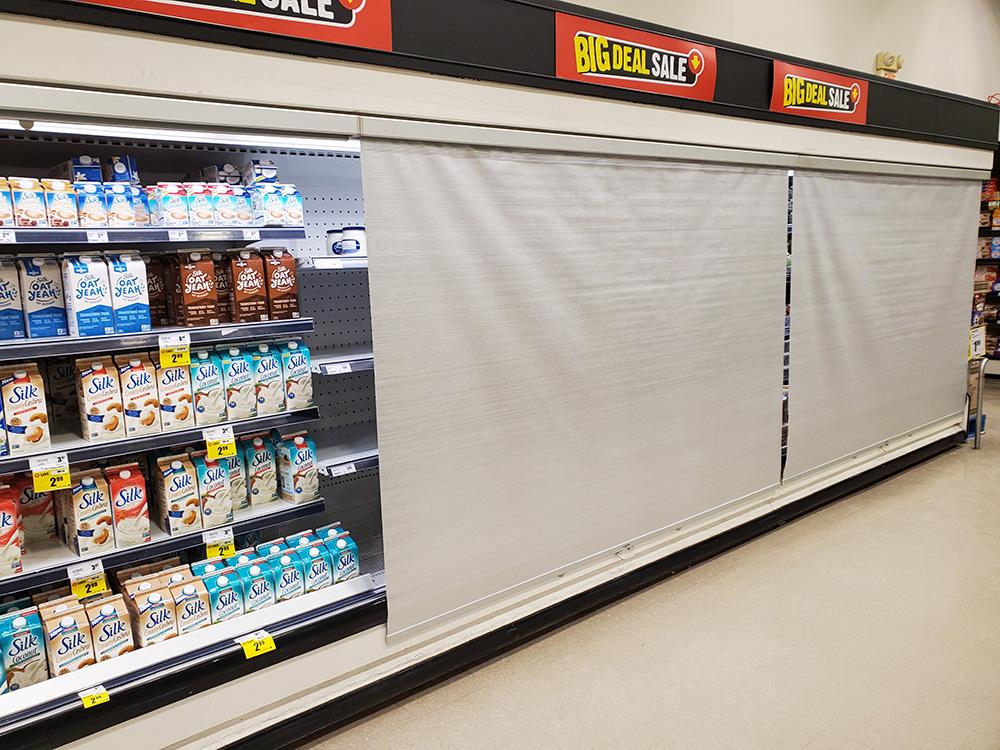
Why dairy is sensitive and how covers help with temperature stability and harmful lights
Dairy products are among the most temperature-sensitive items in any grocery store. Cheese, butter, and milk react quickly to even minor fluctuations in temperature or exposure to lighting that emits heat or harmful wavelengths. Overnight periods, when display cases are left open or partially covered, can accelerate spoilage, color changes, and off-flavors. Night covers provide a simple, cost-effective solution to protect dairy products, maintain temperature stability, and preserve product quality for morning sales.
This guide explains why dairy is so sensitive, how night covers function, and practical steps for stores to implement an effective overnight protection routine.
Why Dairy Requires Extra Care
Dairy products contain fats, proteins, and water in delicate balances that make them prone to spoilage under poor conditions. Common issues include:
- Cheese discoloration: Surface drying or oxidation can turn cheeses darker or create off-colors that reduce visual appeal.
- Butter softening or sweating: Even slight temperature increases can cause butter to lose structure, leading to texture changes.
- Milk quality degradation: Light exposure and thermal fluctuations accelerate oxidation of milk fats, affecting flavor and shelf life.
- Because dairy is often displayed in open or glass-door cases, it is vulnerable to heat transfer, cold air escape, and light-induced stress overnight.
How Night Covers Protect Dairy
Night covers, such as those designed by Econofrost, are installed over refrigerated cases at the end of the business day to create a barrier between the case interior and the store environment. Their benefits for dairy include:
- Temperature stability: Covers trap cold air inside the case, preventing warm ambient air from entering. This reduces the stress on cheese, butter, and milk caused by temperature fluctuations.
- Reduced spoilage and waste: Stabilized temperatures slow oxidation and microbial activity, decreasing the number of products that must be discarded in the morning.
- Protection from harmful lights: Balanced-spectrum or low-heat lighting combined with night covers reduces exposure to wavelengths that accelerate fat oxidation or discoloration.
- Energy efficiency: By maintaining a cooler case overnight, compressors cycle less frequently, lowering energy consumption and operational costs.
Using night covers ensures that dairy products are as fresh in the morning as when the store closed, enhancing both product quality and profitability.
A Step-by-Step Night Cover Routine for Dairy Cases
To maximize the effectiveness of night covers, dairy departments should follow a structured closing procedure:
1. Inspect the Case
- Remove any spoiled or damaged products.
- Check that all items are properly stacked to allow airflow underneath and around products.
2. Position Night Covers
- Fully extend covers over open-top cases or multi-deck displays.
- Ensure edges are flush and magnetic or fastening mechanisms are secured to prevent cold air leakage.
3. Check for Gaps
- Walk along the case to verify that all sections are sealed.
- Adjust corners or overlaps where necessary to maintain consistent temperature retention.
4. Adjust Lighting
- Dim or turn off lights that are not needed overnight.
- Confirm that any remaining lighting is low-heat and food-safe to reduce oxidative stress on dairy fats.
5. Document Completion
- Record night cover placement and case temperature in a checklist or digital log.
- Note any issues for corrective action before the next closing cycle.
Following this routine minimizes overnight temperature spikes and helps dairy remain fresh for the first customer-facing hours.
Additional Tips for Protecting Dairy
Case placement: Position milk, butter, and cheese away from high-traffic heat sources or sunlight if possible.
- Airflow management: Ensure fans or vents do not blow directly on products during overnight operation.
- Night cover maintenance: Inspect covers regularly for wear, warped edges, or stretched magnets that can compromise sealing.
- Staff training: Educate employees on the importance of overnight protection and proper night cover procedures.
These practices, combined with night covers, improve both product quality and operational efficiency.
Benefits of Night Covers in Dairy Departments
Implementing night covers delivers measurable advantages:
- Lower first-hour discard: Products remain at ideal temperature overnight, reducing the number of items that must be rotated or thrown away in the morning.
- Energy savings: Stabilized cases reduce compressor cycles, cutting electricity costs.
- Improved product appearance: Cheese, butter, and milk retain color, texture, and taste, improving customer satisfaction.
- Operational efficiency: Clear SOPs for night covers reduce staff confusion and streamline closing routines.
- Sustainability impact: Reduced spoilage contributes to lower food waste, aligning with corporate ESG goals.
By minimizing overnight stress, night covers protect both revenue and customer trust.
Conclusion
Dairy products are highly sensitive to temperature changes and harmful lighting, making overnight care essential for quality retention. Night covers provide a simple, effective solution for stabilizing refrigeration cases, preserving color, texture, and flavor, and reducing energy consumption.
When combined with food-safe lighting and proper case management, night covers help dairy departments lower first-hour discard, maintain operational efficiency, and enhance sustainability metrics.
For grocery operators looking to protect cheese, butter, and milk overnight while improving efficiency and reducing waste, implementing night covers is a practical, high-impact step.
To explore reliable night cover solutions designed for dairy display cases, visit www.nightcovers.com and learn how to safeguard product quality while supporting your store’s bottom line.