
Introduction
In retail environments, it is commonly assumed that refrigeration systems perform better when customer traffic is low or absent. However, open display refrigeration systems continue to lose efficiency even during non-operational hours. This decline is not related to usage but to continuous physical processes such as heat transfer, air movement, and structural thermal behavior. These hidden factors significantly affect supermarket refrigeration efficiency, even when the store is closed.
- Open System Design and Constant Environmental Exposure: Open refrigerated cases are inherently exposed systems. Unlike closed units, they rely on air curtains and controlled airflow rather than physical barriers.
Because of this design:- Ambient air continuously interacts with the cold zone
- Thermal exchange occurs regardless of customer presence
- System equilibrium is never fully achieved
This structural limitation leads to persistent refrigeration system inefficiencies, even in the absence of traffic.
- Continuous Thermal Exchange After Closing Hours: Even after customers leave, heat exchange does not stop. Surrounding air, building materials, and residual indoor heat continue to influence refrigerated systems.
This process is driven by:- Stored heat in walls and ceilings
- Residual ambient air temperature
- Ongoing conductive and convective heat transfer
These factors sustain open refrigerated case energy loss, even during overnight operation cycles.
- Cold Air Instability in Open Display Systems: Cold air in open cases is not fully contained. It behaves dynamically and tends to escape downward or outward due to density differences.
This leads to:- Continuous cold air leakage
- Reduced air curtain effectiveness
- Mixing of warm and cold air layers
As a result, system efficiency declines and cold air loss in display cases continues even without external disturbances.
- Heat Transfer Mechanisms That Remain Active: Three major heat transfer mechanisms operate continuously in open refrigeration systems:
- Convection
- Radiation
- Conduction
These processes ensure that thermal exchange continues regardless of customer activity, reducing refrigeration thermal performance.
- Airflow Disruption and System Imbalance: Airflow is critical for maintaining temperature stability in open systems. However, airflow patterns are never completely stable due to system design limitations.
Even in empty stores:- Air curtains weaken over time
- Minor pressure differences create turbulence
- Cold air distribution becomes uneven
- This contributes to unstable airflow and reduced cooling efficiency.
- Temperature Recovery Cycles Never Fully Stabilize: Open refrigeration systems continuously cycle between cooling and recovery states. Even without customer interaction, systems must compensate for ongoing thermal intrusion.
This leads to:- Frequent compressor activation
- Delayed temperature stabilization
- Persistent energy consumption
As a result, refrigerated case temperature instability remains a constant operational challenge.
- Hidden Energy Load During Idle Periods: A major misconception is that energy usage significantly drops when stores are empty. In reality, refrigeration systems continue working against environmental heat gain.
This creates:- Continuous compressor load
- Uninterrupted energy draw
- Inefficient overnight performance
These factors directly impact reduce refrigeration energy costs strategies in retail operations.
- Structural Heat Retention in Store Environments: Retail buildings retain heat absorbed during the day. This stored energy slowly releases into the environment overnight.
Sources include:- Concrete flooring and walls
- Ceiling insulation systems
- Lighting fixtures and equipment
This ongoing heat release increases system demand and affects energy savings performance.
- Importance of Design-Based Efficiency Improvements: Improving performance requires addressing system design rather than only operational adjustments.
Key improvements include:- Better insulation strategies
- Optimized airflow engineering
- Reduced open exposure zones
These measures strengthen refrigeration efficiency improvement across all operating conditions.
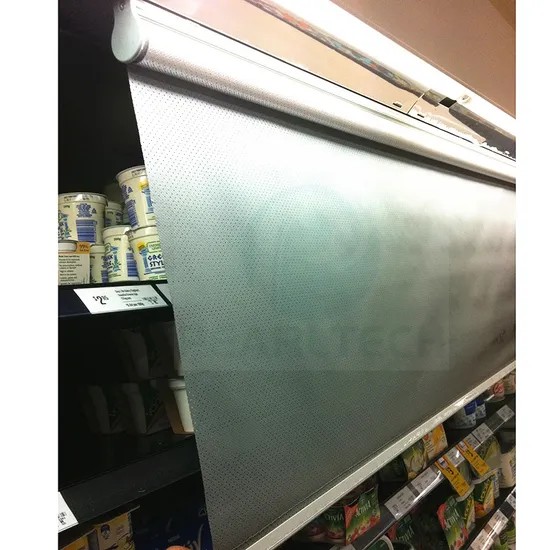
- Role of Night Covers in Efficiency Restoration: One of the most effective solutions for reducing overnight inefficiency is physical coverage of open systems.
Modern night covers for refrigerated cases help:- Block external heat infiltration
- Reduce cold air escape
- Stabilize internal temperature zones
These refrigeration night cover solutions significantly reduce overnight energy waste and improve system stability.
Conclusion
Open case refrigeration efficiency drops even without customer traffic due to continuous heat transfer, airflow instability, and structural thermal retention. These factors ensure that systems remain under constant load, leading to persistent open refrigerated case energy loss and reduced overall performance.
By implementing design improvements and using night covers for refrigerated cases, retailers can significantly improve supermarket refrigeration efficiency, reduce energy consumption, and stabilize cooling performance across all operating hours.
For More Information
For more insights on advanced refrigeration efficiency and night cover solutions, visit https://www.nightcovers.com.