
Introduction
In modern supermarkets, refrigeration systems do not operate as isolated units. Instead, they function as an interconnected energy network where cooling demand shifts dynamically across multiple display zones. This phenomenon is known as refrigeration load redistribution. It plays a major role in determining overall energy consumption and directly influences supermarket refrigeration efficiency, especially in stores with multiple open display cases.
Even when individual units appear stable, load shifting across the system can create hidden inefficiencies that increase total energy usage across the entire store.
1. Understanding Refrigeration Load Redistribution
Refrigeration load redistribution refers to the shifting of cooling demand between different refrigeration units based on environmental conditions, product temperature changes, and system response behavior.
In supermarket environments, this occurs when:
- One display case experiences higher heat gain than others
- Compressors adjust output to balance system-wide temperature
- Cooling demand shifts between interconnected circuits
This dynamic balancing process often leads to refrigeration system inefficiencies when not properly controlled.
2. Why Load Is Not Equally Distributed in Stores
Refrigeration load is rarely uniform across a store. Different zones experience varying thermal stress due to layout, airflow, and exposure conditions.
Key factors include:
- Placement of open refrigerated cases
- Proximity to entrances or heat sources
- Lighting intensity variations across sections
These differences cause uneven cooling demand, increasing refrigeration thermal performance imbalance across store areas.
3. Impact of Open Refrigerated Case Design on Load Shifting
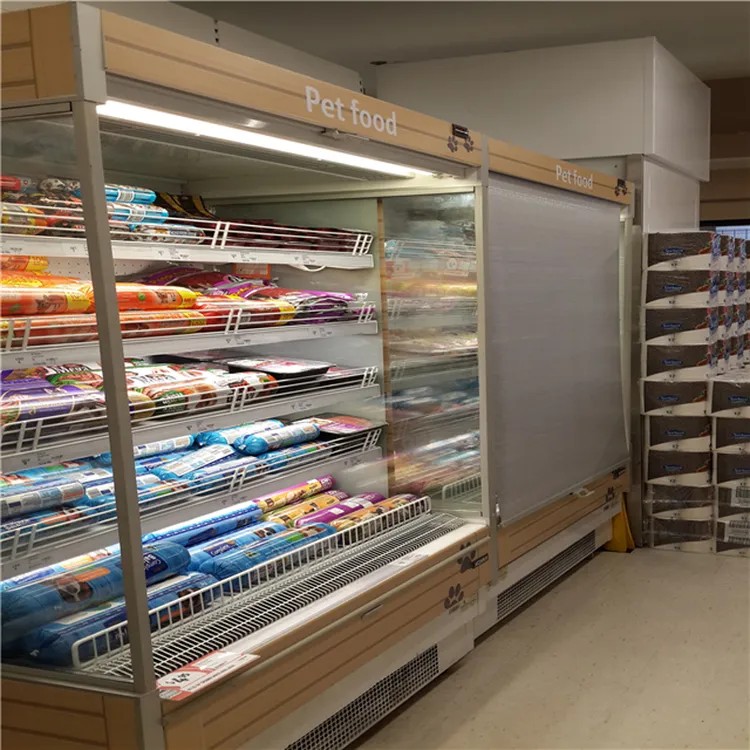
Open refrigerated systems are particularly sensitive to load redistribution because they continuously exchange air with the surrounding environment.
This leads to:
- Higher cooling demand in exposed zones
- Continuous compensation by central systems
- Unstable load balancing across circuits
As a result, stores experience persistent open refrigerated case energy loss, even when some sections are under lower demand.
4. Cold Air Loss and System Compensation Behavior
When cold air escapes from one zone, refrigeration systems compensate by increasing cooling output elsewhere. This creates a ripple effect across the entire system.
This process results in:
- Uneven compressor cycling
- Increased energy draw in connected units
- Delayed temperature stabilization
These effects directly contribute to cold air loss in display cases, increasing overall store energy consumption.
5. Thermal Interaction Between Store Zones
Heat does not remain isolated within one section of a supermarket. Instead, it transfers between zones through air movement and structural conduction.
This leads to:
- Cross-zone heat migration
- Shared cooling load across systems
- Increased baseline refrigeration demand
Such interactions reduce overall refrigeration efficiency improvement potential across the store.
6. Airflow Imbalance and Load Redistribution Effects
Airflow plays a critical role in maintaining stable refrigeration performance. When airflow is uneven, cooling demand shifts unpredictably across systems.
This results in:
- Overloading of specific refrigeration units
- Underutilization of others
- Continuous system recalibration
These conditions negatively impact airflow in refrigerated display cases, increasing energy inefficiency.
7. Energy Consumption and System-Wide Load Stress
Load redistribution often leads to higher total energy consumption because systems must constantly adjust to balance uneven demand.
This creates:
- Increased compressor runtime across multiple units
- Higher peak load conditions
- Reduced operational stability
These effects directly impact reduce refrigeration energy costs strategies in retail operations.
8. Temperature Instability Across Display Zones
When refrigeration load shifts frequently, temperature consistency becomes difficult to maintain across different store areas.
This results in:
- Fluctuating cooling levels in display cases
- Uneven product preservation conditions
- Reduced control over thermal zones
Such instability affects refrigerated case temperature instability, increasing overall system workload.
9. Hidden Inefficiencies in Energy Monitoring Systems
Many supermarkets rely on centralized monitoring systems that fail to capture localized load redistribution effects.
Common limitations include:
- Averaged temperature readings across zones
- Lack of real-time load tracking
- Inability to detect micro-level inefficiencies
This leads to inaccurate supermarket energy savings solutions assessments and hidden energy loss.
10. Impact on Product Freshness and Waste Reduction
Uneven refrigeration load also affects product quality across store sections. Areas experiencing higher load stress may not maintain optimal conditions consistently.
This leads to:
- Reduced maintain product freshness retail performance
- Increased risk of uneven spoilage
- Higher reduce food spoilage supermarket impact
These effects directly influence retail profitability and operational consistency.
11. Importance of Load Optimization Strategies
To improve performance, supermarkets must actively manage refrigeration load distribution across all systems.
Effective strategies include:
- Improved case positioning and zoning
- Advanced airflow balancing systems
- Smart refrigeration control technologies
These improvements enhance refrigeration energy optimization and reduce unnecessary energy redistribution losses.
12. Role of Night Covers in Load Stabilization
One of the most effective methods to reduce load imbalance is minimizing overnight thermal variation in open systems.
Modern night covers for refrigerated cases help:
- Reduce heat infiltration in idle periods
- Stabilize cooling demand across zones
- Prevent unnecessary load shifting overnight
These refrigeration night cover solutions improve overall system stability and reduce store-wide energy stress.
Conclusion
Refrigeration load redistribution significantly impacts store-wide energy usage by creating uneven cooling demand, airflow imbalance, and thermal inconsistencies across different zones. These hidden dynamics increase supermarket refrigeration efficiency challenges and contribute to higher operational costs.
By improving system design and implementing night covers for refrigerated cases, retailers can reduce open refrigerated case energy loss, stabilize load distribution, and achieve more efficient store-wide energy performance.
For More Information
For more insights on advanced refrigeration efficiency and night cover solutions, visit https://www.nightcovers.com.