
Introduction
In modern supermarkets, refrigeration and HVAC systems are not independent units.they operate as a coupled thermal network. After store closing, when customer activity stops, it is often assumed that energy demand drops significantly. However, HVAC systems continue to work actively to compensate for thermal imbalance created by open refrigeration systems. This hidden interaction plays a major role in overall supermarket refrigeration efficiency, especially during overnight operation.
1. The Link Between HVAC and Open Refrigeration Systems
HVAC systems are designed to maintain overall indoor climate stability, while refrigeration systems maintain product temperature. In open retail environments, both systems continuously interact through shared air and heat exchange.
When open refrigerated cases release cold air into the surrounding environment, HVAC systems respond by:
- Rebalancing room temperature
- Removing excess humidity
- Stabilizing ambient thermal conditions
This interaction leads to continuous refrigeration system inefficiencies, even after store hours.
2. Why HVAC Load Continues After Closing Hours
Even when the store is empty, thermal imbalance does not disappear. Open refrigerated cases continue to release cold air, which lowers localized air temperature unevenly.
At the same time:
- Heat from building materials continues to enter the space
- Refrigeration systems keep running to maintain product safety
- Air circulation patterns remain active
As a result, HVAC systems must compensate continuously, increasing reduce refrigeration energy costs pressure overnight.
3. Open Refrigeration as a Continuous Heat Disruptor
Open refrigerated cases behave as constant thermal disruptors in the indoor environment. Because they are not fully enclosed, they interact directly with surrounding air.
This leads to:
- Continuous cold air leakage into aisles
- Warm air infiltration into display zones
- Disruption of room-level thermal balance
These effects contribute significantly to open refrigerated case energy loss, even when no customers are present.
4. Air Mixing Between HVAC Zones and Display Areas
Air inside a supermarket does not remain static. It continuously circulates between HVAC-controlled zones and refrigerated sections.
This causes:
- Mixing of conditioned and unconditioned air
- Uneven temperature distribution across the store
- Increased HVAC correction cycles
This instability reduces overall airflow in refrigerated display cases, making both systems work harder than necessary.
5. Temperature Imbalance Triggering HVAC Response
Even minor temperature changes near open refrigerated cases can trigger HVAC compensation cycles. HVAC sensors detect localized cooling from escaping air and respond by increasing heating or redistribution.
This results in:
- Continuous temperature adjustments
- Increased HVAC runtime after hours
- Reduced system efficiency during idle periods
This directly impacts refrigerated case temperature instability, which extends beyond refrigeration systems into HVAC operations.
6. Heat Gain and System-Wide Compensation Loop
HVAC systems also react to heat gain caused by refrigeration inefficiencies. When open cases fail to fully contain cold air, surrounding zones experience uneven thermal conditions.
This creates a compensation loop:
- Cold air escapes refrigeration units
- HVAC detects imbalance
- HVAC adjusts airflow or temperature
- Refrigeration systems increase load to compensate
This cycle significantly reduces refrigeration thermal performance across the entire store.
7. Why Energy Consumption Remains High Overnight
Even after closing hours, both HVAC and refrigeration systems remain active due to continuous thermal balancing requirements.
This leads to:
- Ongoing compressor operation
- HVAC fan and circulation activity
- Persistent energy draw across systems
These combined effects explain why supermarket energy savings solutions often underperform in real-world conditions.
8. Impact on Refrigeration Efficiency and Load Stress
HVAC compensation increases refrigeration system workload indirectly. When HVAC adjusts ambient conditions, refrigeration systems must respond to maintain product-level stability.
This results in:
- Higher compressor cycling frequency
- Increased load variability
- Reduced system stability
These interactions contribute to lower refrigeration efficiency improvement across store operations.
9. Hidden Energy Waste in Integrated Systems
One of the most overlooked issues in supermarket energy analysis is the hidden interaction between HVAC and refrigeration systems.
Common issues include:
- Underestimated energy usage after hours
- Lack of cross-system monitoring
- Ignored airflow coupling effects
This leads to inaccurate refrigeration energy optimization assessments and hidden operational losses.
10. Product Impact from Thermal Instability
HVAC compensation indirectly affects product quality by destabilizing surrounding air conditions.
This results in:
- Reduced maintain product freshness retail performance
- Uneven cooling exposure across display zones
- Increased risk of spoilage in sensitive products
These effects contribute to reduce food spoilage supermarket challenges over time.
11. Importance of System-Level Coordination
To reduce HVAC compensation load, supermarkets must consider integrated system design rather than isolated optimization.
Key improvements include:
- Better zoning between HVAC and refrigeration areas
- Optimized airflow separation strategies
- Reduced open exposure in display systems
These measures improve overall supermarket refrigeration efficiency and reduce unnecessary system interaction.
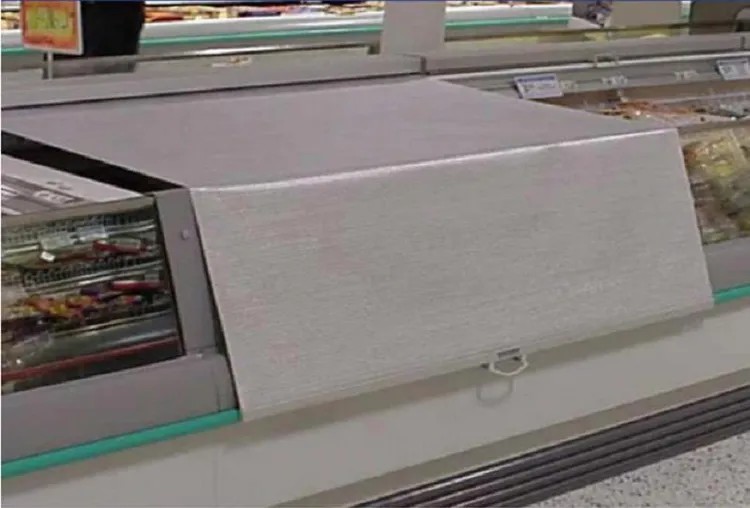
12. Role of Night Covers in Reducing HVAC Load
One of the most effective ways to reduce HVAC compensation is minimizing cold air leakage from open refrigerated cases.
Modern night covers for refrigerated cases help:
- Block cold air escape during off-hours
- Reduce thermal imbalance in store environment
- Lower HVAC compensation cycles
These refrigeration night cover solutions significantly reduce overnight energy interaction between systems.
Conclusion
HVAC systems compensate for open refrigeration after hours due to continuous thermal imbalance caused by cold air leakage, heat gain, and airflow instability. This hidden interaction increases system workload across both HVAC and refrigeration networks, reducing supermarket refrigeration efficiency and increasing energy consumption.
By improving system integration and implementing night covers for refrigerated cases, retailers can reduce open refrigerated case energy loss, minimize HVAC compensation cycles, and achieve more stable and efficient overnight operations.
For More Information
For more insights on advanced refrigeration efficiency and night cover solutions, visithttps://www.nightcovers.com.