
Introduction
In supermarket refrigeration systems, it is often assumed that stable case air temperature guarantees product safety. However, in real-world open display environments, product core temperature can rise even when the surrounding air appears consistently controlled. This discrepancy is one of the most overlooked issues affecting supermarket refrigeration efficiency, especially in open refrigerated systems.
The difference between air temperature and product internal temperature reveals deeper thermal dynamics that impact food safety, energy use, and overall system performance.
1. Air Temperature vs Product Core Temperature
Air temperature in a refrigerated case reflects only the surrounding environment, not the internal state of the food product. Products have thermal mass, meaning they absorb and retain heat or cold at different rates compared to air.
Even when sensors show stable conditions:
- Surface air may remain within acceptable limits
- Product interiors continue to respond to past heat exposure
- Thermal lag creates delayed temperature stabilization
This mismatch contributes to hidden refrigeration system inefficiencies that are not visible through standard monitoring.
2. Thermal Inertia in Food Products
Food products do not change temperature instantly. They have thermal inertia, meaning they resist rapid temperature change due to their density and composition.
This leads to:
- Slow cooling of product core
- Delayed heat dissipation after exposure
- Persistent internal temperature elevation
As a result, even in stable conditions, product core temperature may remain higher than expected, reducing refrigeration thermal performance effectiveness.
3. Heat Exposure Before Stabilization
Before products reach the display case, they are exposed to multiple heat sources such as transportation, handling, and stocking processes.
This pre-exposure causes:
- Elevated initial product temperature
- Delayed cooling response inside the case
- Longer stabilization time inside refrigeration units
These conditions increase open refrigerated case energy loss indirectly, as systems must work harder to restore equilibrium.
4. Surface Cooling vs Internal Temperature Lag
Refrigerated air primarily cools the surface of food products. However, heat transfer into the core happens more slowly.
This creates a thermal gradient:
- Outer layer cools quickly
- Inner core retains heat longer
- Full equilibrium takes extended time
This delay is a major reason why refrigerated case temperature instability appears even when air readings seem stable.
5. Impact of Airflow Inefficiency in Open Cases
Airflow in open refrigerated systems is not always evenly distributed. Uneven circulation reduces heat removal efficiency from deeper layers of products.
This results in:
- Weak cooling penetration
- Uneven temperature distribution
- Slower internal heat removal
These airflow limitations reduce overall airflow in refrigerated display cases efficiency.
6. Heat Gain from Environmental Interaction
Even in controlled environments, refrigerated products are exposed to continuous low-level heat gain from surrounding air and surfaces.
Key sources include:
- Ambient store temperature fluctuations
- Radiant heat from lighting systems
- Nearby equipment and structural heat retention
This ongoing heat exposure contributes to reduced refrigeration thermal performance across display zones.
7. Role of Display Time and Exposure Duration
The longer a product remains in a display case, the more it accumulates thermal stress, even if air temperature remains constant.
This leads to:
- Gradual increase in core temperature
- Reduced cooling efficiency over time
- Higher spoilage risk in perishable goods
This directly impacts maintain product freshness retail performance in long-duration display environments.
8. Sensor Limitations in Air-Based Monitoring
Most refrigeration systems rely on air temperature sensors rather than direct product measurement. This creates a gap in accuracy.
As a result:
- System assumes stable conditions
- Internal product warming goes undetected
- Cooling adjustments are delayed
This leads to inefficient refrigeration energy optimization and hidden performance issues.
9. Energy Implications of Hidden Thermal Load
When product core temperature rises, refrigeration systems must compensate by increasing cooling cycles.
This results in:
- Higher compressor runtime
- Increased energy consumption
- Reduced system efficiency
These effects contribute to higher reduce refrigeration energy costs challenges in retail operations.
10. Product Quality and Shelf Life Impact
Rising core temperature affects food quality even before visible spoilage occurs.
Consequences include:
- Reduced maintain product freshness retail
- Accelerated microbial activity
- Shortened shelf life stability
These conditions directly increase reduce food spoilage supermarket risks, even in temperature-controlled environments.
11. Importance of System Design Improvements
To address core temperature rise, refrigeration systems must focus on improving heat transfer efficiency rather than only controlling air temperature.
Effective strategies include:
- Enhanced airflow penetration systems
- Better product spacing for cooling access
- Improved display case insulation design
These improvements strengthen refrigeration efficiency improvement across store operations.
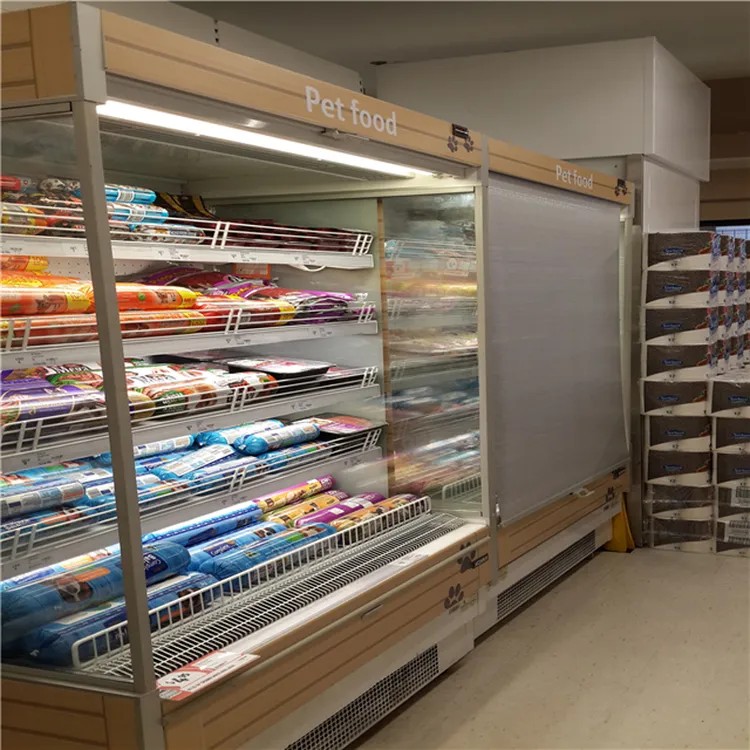
12. Role of Night Covers in Temperature Stabilization
One effective method for reducing thermal imbalance is minimizing environmental heat exposure during non-operational hours.
Modern night covers for refrigerated cases help:
- Reduce residual heat absorption
- Maintain stable cooling conditions overnight
- Support faster product temperature recovery
These refrigeration night cover solutions improve system stability and reduce unnecessary energy load.
Conclusion
Product core temperature can rise even when refrigerated case air temperature remains stable due to thermal inertia, airflow limitations, and continuous environmental heat exposure. This hidden thermal behavior creates inefficiencies in supermarket refrigeration efficiency and affects both product quality and energy consumption.
By improving airflow design and using night covers for refrigerated cases, retailers can reduce open refrigerated case energy loss, improve temperature stability, and ensure better long-term refrigeration performance.
For More Information
For more insights on advanced refrigeration efficiency and night cover solutions, visit https://www.nightcovers.com.