
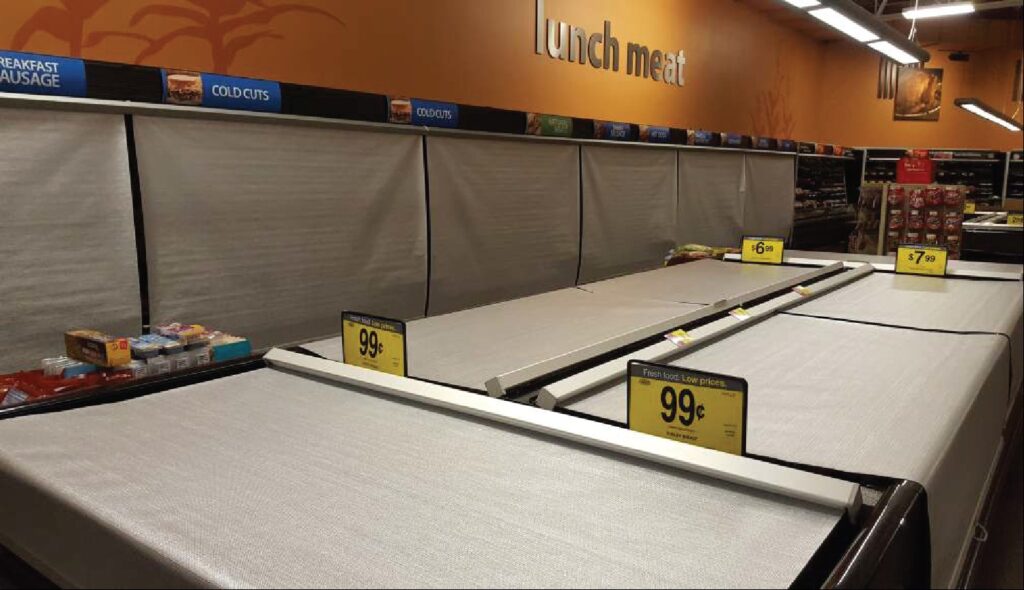
How overnight conditions affect color and surface moisture and what store teams can control
Meat displays are a critical revenue driver for grocery stores. Shoppers make split-second decisions based on appearance, especially in the front row of service and self-serve cases. Uneven color, drying, or surface gloss can create the impression of lower quality, even when products are perfectly safe and fresh.
Overnight periods are particularly challenging because open or partially covered cases are vulnerable to temperature fluctuations, moisture loss, and exposure to ambient or harmful lights. Night covers provide an effective, low-effort solution to maintain consistent product appearance and protect retail revenue.
This guide explains why meat cases require special overnight care, how night covers help, and practical steps staff can implement to keep front-row cuts visually appealing.
Why Meat Displays Are Sensitive Overnight
Front-row meat cuts are most visible to customers, making them the “face” of the display. Several factors contribute to uneven appearance:
- Temperature fluctuations: Open cases or inadequate insulation allow ambient heat to raise the surface temperature, accelerating oxidation and moisture loss.
- Moisture evaporation: Overnight airflow can dry out the surface of fresh meat, leaving edges pale, dull, or gray.
- Light exposure: Harmful lights, particularly unfiltered or high-heat fixtures, can trigger pigment changes that make reds look brown and fats appear yellowed.
- Uneven cooling: Cases that are not fully sealed or have airflow issues create microclimates, resulting in a visually inconsistent display.
Left unaddressed, these factors lead to increased discard, dissatisfied customers, and unnecessary labor handling.
How Night Covers Protect Meat Displays
Night covers, like those offered by Econofrost, are designed to fit securely over meat display cases after store hours. Their benefits include:
- Temperature stabilization: Covers trap cold air inside the case, preventing overnight warming that can accelerate discoloration and moisture loss.
- Moisture retention: By reducing airflow over the product, covers help maintain surface moisture, keeping front-row cuts glossy and appealing.
- Protection from light: Covers reduce exposure to harmful light spectra that accelerate oxidation and color fading.
- Energy efficiency: Stabilized temperatures reduce refrigeration cycles, lowering utility costs without compromising product quality.
Using night covers consistently ensures that meat displays look even and fresh at opening, supporting both customer perception and sales.
Night Cover Best Practices for Meat Cases
To maximize overnight protection, store teams should follow a structured routine:
To maximize overnight protection, store teams should follow a structured routine:
1. Inspect and Rotate Front-Row Cuts
- Remove items showing signs of discoloration or drying.
- Rotate products to ensure even exposure to case conditions.
2. Position Night Covers Correctly
- Fully extend covers across the entire case, ensuring edges are flush and sealed.
- Check corners, overlaps, and gaps to maintain effective temperature control.
3. Adjust Lighting
- Dim or switch off unnecessary lights.
- Ensure any remaining lighting is food-safe, low-heat, and balanced to reduce oxidation.
4. Monitor Temperature
- Verify overnight temperatures are within the ideal range for meat products.
- Use case thermometers or sensors to track fluctuations and confirm cover effectiveness.
5. Document and Track
- Maintain a log for staff to record cover placement, temperature checks, and any product observations.
- Regularly review records to identify recurring issues and optimize procedures.
Consistent adherence to these steps ensures the front-row products remain visually appealing and safe for consumers.
Additional Tips for Meat Case Protection
- Airflow management: Adjust fans or vents to avoid drying specific areas of the case.
- Cover maintenance: Inspect night covers for wear, warped edges, or broken magnets that could compromise sealing.
- Staff training: Educate employees on proper cover placement, hygiene-friendly handling, and the importance of protecting front-row cuts.
- Case layout: Arrange products to minimize gaps and maintain uniform exposure to cold air.
Proper training and attention to these details enhance both product quality and operational efficiency.
Benefits of Night Covers for Meat Departments
Retailers consistently using night covers for meat cases experience measurable advantages:
- Consistent color and surface appearance: Front-row cuts remain vibrant, glossy, and visually appealing.
- Reduced discard: Maintaining temperature and moisture overnight minimizes product loss.
- Operational efficiency: Standardized nightly routines reduce time spent correcting spoilage or uneven displays in the morning.
- Energy savings: Cooler, stable cases reduce refrigeration cycles, lowering electricity costs.
- Customer satisfaction: Appealing meat displays drive confidence and repeat purchases.
By protecting the most visible products, night covers help retailers maintain both profitability and reputation.
Conclusion
Meat display cases are highly sensitive to overnight conditions, and the front row is the most critical for driving sales. Night covers provide a practical solution to stabilize temperature, maintain moisture, and reduce harmful light exposure, keeping cuts looking fresh and uniform at opening.
When combined with proper lighting, airflow management, and staff training, night covers protect product appearance, reduce waste, and improve operational efficiency.
For grocery operators looking to safeguard fresh meat displays and enhance customer satisfaction, night covers are a simple, high-impact solution.
For more information on reliable night cover solutions for meat cases, visit www.nightcovers.com and discover how overnight protection can maintain quality, reduce discard, and improve store efficiency.