
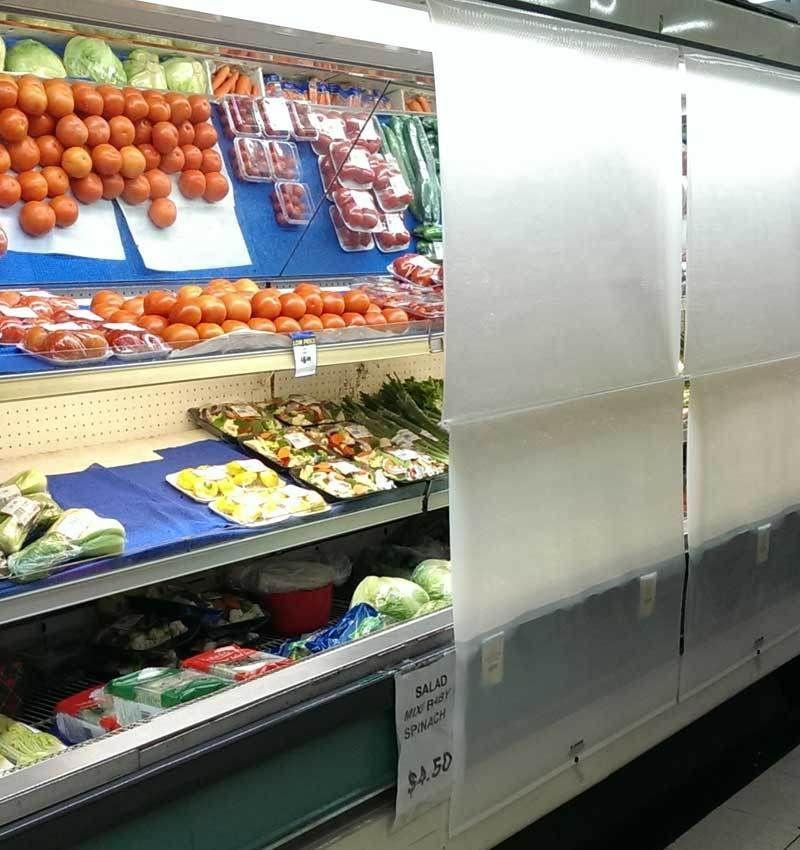
Practical tips for service and self-serve cases, including sanitation-friendly handling
Deli and prepared foods are among the most visually sensitive products in a grocery store. Items like salads, sliced meats, sandwiches, and ready-to-eat meals rely heavily on appearance to drive sales. Any discoloration, drying, or off-texture can reduce customer confidence and lead to unnecessary waste. While refrigeration is essential, overnight periods can pose challenges as open or partially covered cases allow temperature drift, moisture loss, and exposure to harmful lighting. Night covers provide a practical solution for preserving freshness, maintaining visual appeal, and streamlining operational routines.
This guide outlines why deli and prepared foods need extra care, how night covers protect them, and best practices for staff to implement an effective nightly routine.
Why Deli and Prepared Foods Are Vulnerable
Prepared foods often contain mixed ingredients with varying sensitivity to temperature and light. Common issues include:
- Color changes in sliced meats: Oxidation can cause red meats to brown or pale meats to gray, especially on the front-row items most visible to customers.
- Salad and vegetable drying: Lettuce, leafy greens, and cut vegetables lose moisture quickly, leading to wilted, unappealing displays.
- Sauce or dressing separation: Exposure to fluctuating temperatures can cause sauces, dips, and dressings to separate or thicken unnaturally.
- Loss of flavor and texture: Dairy-based salads, deli spreads, and prepared meals can degrade in taste and mouthfeel when subjected to overnight temperature swings or harmful light exposure.
Because these products are frequently displayed in open-top, self-serve, or service-case formats, even minor overnight stress can negatively impact first-hour sales and increase discard rates.
How Night Covers Protect Deli and Prepared Foods
Night covers, such as those designed by Econofrost, are installed over refrigerated cases at closing time. Their benefits for deli and prepared foods include:
- Temperature stabilization: Covers trap cold air inside the case, preventing ambient heat from accelerating spoilage.
- Moisture retention: Reducing airflow over sensitive foods helps preserve crispness in greens and prevents drying in sliced meats and salads.
- Protection from harmful lights: Balanced-spectrum or low-heat lighting combined with covers reduces oxidative stress on ingredients, maintaining natural colors and flavors.
- Energy efficiency: Stabilized temperatures mean compressors cycle less frequently, lowering electricity costs while protecting product quality.
Using night covers ensures that deli and prepared foods retain their appearance, taste, and safety for the first customers of the next day.
A Step-by-Step Night Cover Routine for Deli Cases
To maximize effectiveness, deli departments should follow a structured nightly procedure:
1. Inspect and Rotate Products
- Remove any items showing signs of spoilage or drying.
- Rotate front-row items to ensure even exposure to the case environment.
2. Position Night Covers Properly
- Fully extend covers over service counters and self-serve bins.
- Ensure edges are flush to prevent cold air from escaping and maintain consistent temperatures.
3. Check for Gaps and Alignment
- Walk along the case to verify complete coverage.
- Adjust corners or overlaps where necessary to maintain an effective seal.
4. Adjust Lighting
- Dim or turn off unnecessary lights.
- Verify remaining lighting is low-heat and food-safe to reduce oxidative stress on ingredients.
5. Sanitation-Friendly Handling
- Train staff to handle covers using clean hands or approved sanitation tools.
- Avoid placing covers directly on product surfaces to maintain food safety standards.
6. Document Completion
- Record night cover placement and case temperature in a checklist or digital log.
- Note any issues to ensure follow-up before the next closing cycle.
This routine protects both product quality and staff accountability.
Additional Tips for Deli and Prepared Food Protection
- Case placement: Keep salads and sliced items away from high-traffic heat sources or sunlight.
- Airflow management: Ensure fans or vents are directed in a way that doesn’t blow directly over delicate products.
- Night cover maintenance: Inspect covers for warping, damaged magnets, or worn edges that could reduce sealing effectiveness.
- Staff training: Educate employees on the importance of nightly protection, proper cover handling, and hygiene practices.
Implementing these steps helps maintain visual appeal and flavor without requiring changes to recipes or packaging.
Benefits of Night Covers for Deli and Prepared Foods
Proper night cover use provides measurable advantages for retailers:
- Reduced discard rates: Maintaining temperature and moisture overnight keeps products fresher for morning sales.
- Improved appearance: Salads remain crisp, sliced meats retain vibrant colors, and ready-to-eat meals stay visually appealing.
- Operational efficiency: Clear SOPs simplify nightly routines and reduce the time spent addressing spoilage.
- Energy savings: Stabilized temperatures reduce compressor cycles, lowering electricity costs.
- Customer satisfaction: Products appear fresh and appealing at opening, improving shopper confidence and repeat business.
By reducing overnight stress, night covers protect revenue, minimize waste, and enhance store operations.
Conclusion
Deli and prepared foods are highly sensitive to temperature swings, light exposure, and airflow, making overnight care essential. Night covers offer a practical, effective solution to stabilize temperatures, preserve moisture, and reduce the impact of harmful lights.
When combined with proper lighting, case management, and sanitation-friendly handling, night covers help stores maintain product quality, reduce first-hour discard, and improve energy efficiency.
For grocery operators looking to protect salads, sliced meats, and ready-to-eat meals overnight while improving operational efficiency, implementing night covers is a simple, high-impact solution.
To explore reliable night cover solutions for deli and prepared foods, visit www.nightcovers.com and discover how overnight protection can support product quality, staff efficiency, and profitability.