
Introduction
In supermarket environments, open refrigerated displays are designed to maintain a uniform cooling environment. However, in practice, these systems develop small internal variations in temperature known as micro-temperature zones. These zones exist even when sensors indicate stable conditions and significantly affect supermarket refrigeration efficiency.
Understanding how these micro-zones form is essential for improving product safety, reducing energy waste, and optimizing refrigeration performance in retail systems.
1. What Are Micro-Temperature Zones?
Micro-temperature zones are small, localized areas within a refrigerated display where temperature differs slightly from surrounding regions. These variations may seem minor but can have a significant impact on food quality and system performance.
They typically occur due to:
- Uneven airflow distribution
- Heat gain from external sources
- Structural design of open cases
These inconsistencies contribute to hidden refrigeration system inefficiencies that are not always visible through standard monitoring systems.
2. Airflow Irregularity as a Primary Cause
Airflow is the most important factor in maintaining temperature consistency. In open refrigerated displays, airflow is continuous but not always uniform.
This leads to:
- Faster cooling in direct airflow paths
- Slower cooling in shaded or blocked areas
- Formation of temperature gradients across the case
These irregularities reduce airflow in refrigerated display cases efficiency and create persistent micro-zones.
3. Impact of Open Case Design on Temperature Distribution
Open refrigerated systems rely on air curtains instead of physical barriers. While effective in theory, this design allows continuous interaction with ambient air.
This results in:
- Cold air escaping at different points
- Warm air entering unevenly
- Disrupted internal temperature balance
These structural limitations contribute directly to open refrigerated case energy loss and uneven cooling patterns.
4. Heat Gain and External Environmental Influence
Even in controlled retail environments, heat continuously enters refrigerated systems from surrounding sources.
Key contributors include:
- Store lighting systems
- Customer movement during operating hours
- Building materials retaining daytime heat
This ongoing heat input creates localized warm spots, reducing overall refrigeration thermal performance.
5. Product Placement and Cooling Inefficiency
The position of products inside a display case significantly affects how quickly they cool.
Items placed:
- Near airflow vents cool faster
- In corner or edge areas cool slower
- Behind stacked products retain more heat
This uneven exposure leads to micro-temperature variation and impacts maintain product freshness retail outcomes.
6. Thermal Stratification Inside Display Cases
Air inside refrigerated displays does not remain evenly mixed. Instead, it naturally forms layers based on temperature differences.
This process, known as thermal stratification, causes:
- Cooler air to settle in lower zones
- Warmer air to rise or remain in upper regions
- Vertical temperature differences across the case
These patterns increase refrigerated case temperature instability, even when average readings appear stable.
7. Effect of Continuous System Cycling
Refrigeration systems continuously cycle to maintain target temperatures. However, frequent cycling can create short-term imbalances.
This results in:
- Temporary overcooling in certain zones
- Delayed cooling in others
- Repeated adjustment phases within the system
These fluctuations reduce refrigeration efficiency improvement and contribute to uneven temperature distribution.
8. Influence of Air Leakage and Cold Air Loss
Even small air leaks can significantly affect internal temperature consistency in open cases.
This leads to:
- Localized warming near exposed edges
- Reduced cooling effectiveness in affected areas
- Continuous system compensation cycles
Such conditions directly contribute to cold air loss in display cases, increasing energy demand and instability.
9. Energy Implications of Micro-Zone Formation
Micro-temperature zones force refrigeration systems to work harder to maintain overall balance.
This results in:
- Increased compressor activity
- Higher energy consumption
- Reduced operational efficiency
These effects impact reduce refrigeration energy costs strategies in large-scale retail environments.
10. Impact on Product Quality and Shelf Life
Temperature variation inside display cases directly affects food preservation quality.
Consequences include:
- Uneven maintain product freshness retail performance
- Faster spoilage in warmer zones
- Inconsistent shelf life across identical products
This increases reduce food spoilage supermarket risk and reduces overall product reliability.
11. Importance of System Optimization
Reducing micro-temperature zones requires improving airflow design, insulation quality, and system balance.
Key improvements include:
- Better air curtain stability
- Optimized product spacing
- Enhanced refrigeration control systems
These upgrades support refrigeration energy optimization and improve temperature consistency across displays.
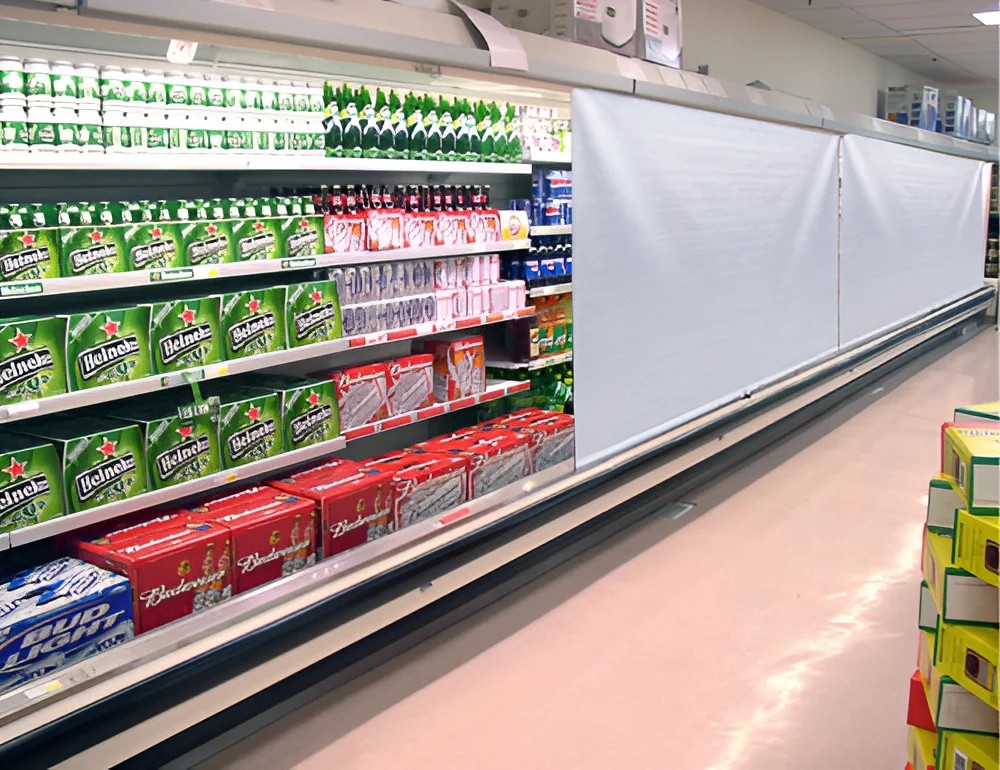
12. Role of Night Covers in Reducing Temperature Variation
One effective method for minimizing temperature fluctuations is reducing overnight environmental exposure.
Modern night covers for refrigerated cases help:
- Prevent external heat infiltration
- Stabilize internal temperature distribution
- Reduce overnight thermal imbalance
These refrigeration night cover solutions significantly improve system stability and reduce long-term energy loss.
Conclusion
Micro-temperature zones in open refrigerated displays develop due to airflow irregularities, heat gain, structural design limitations, and continuous system cycling. These small variations significantly impact supermarket refrigeration efficiency, product quality, and energy consumption.
By improving system design and implementing night covers for refrigerated cases, retailers can reduce open refrigerated case energy loss, stabilize temperature distribution, and enhance overall refrigeration performance.
For More Information
For more insights on advanced refrigeration efficiency and night cover solutions, visit https://www.nightcovers.com.