
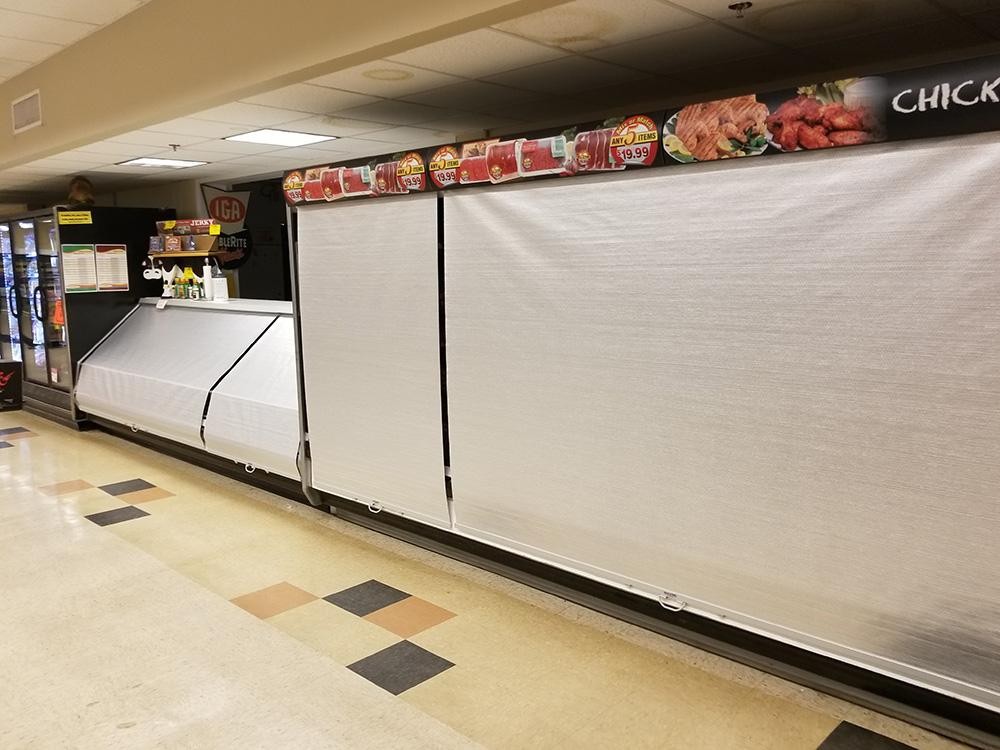
Case setup tips that improve morning presentation without changing the display layout
Seafood displays are among the most delicate areas in a grocery store. Fish, shellfish, and other fresh seafood require precise temperature control and careful handling to maintain appearance, texture, and flavor. Overnight periods are particularly challenging, as open or inadequately protected cases are exposed to temperature fluctuations, ice melt, and residual odors. In addition, reflections from glass and ice surfaces can exaggerate imperfections, affecting shopper perception. Night covers provide a practical, low-effort solution to protect seafood displays and ensure products look appealing at store opening.
This guide explains the benefits of night covers for seafood cases, operational best practices, and simple steps to improve display quality without altering layout or refrigeration setup.
Why Seafood Displays Need Special Overnight Protection
Seafood is highly sensitive to environmental conditions:
- Temperature fluctuations: Ice beds and chilled surfaces can warm overnight if cases are left open, accelerating spoilage and odor development.
- Ice melt and condensation: Standing water increases bacterial risk and creates uneven surfaces that affect presentation.
- Glare and reflection: Ice and glass amplify light exposure, making color inconsistencies more noticeable.
- Odor transfer: Without proper coverage, strong seafood aromas can spread to nearby displays, impacting other products.
These factors, left unmanaged, can result in diminished product appearance, increased waste, and potential customer complaints.
How Night Covers Protect Seafood Displays
Night covers, such as Econofrost solutions, provide multiple benefits for seafood cases:
- Temperature stabilization: Covers trap cold air and slow ice melt, keeping seafood chilled and firm overnight.
- Moisture retention: Reduced airflow minimizes water evaporation and maintains a consistent ice bed surface.
- Glare reduction: Covers limit overhead light exposure, decreasing reflections on ice and seafood surfaces.
- Odor containment: Properly sealed covers prevent seafood aromas from spreading to other departments.
- Energy savings: Maintaining stable temperatures reduces compressor cycles and overall electricity use.
Consistent use ensures that seafood displays remain fresh, visually appealing, and ready for customers in the morning.
Best Practices for Using Night Covers on Seafood Cases
To maximize the effectiveness of night covers in seafood departments, stores should adopt a structured routine:
1. Ice Bed Management
- Level ice evenly before closing.
- Remove excess water that could accumulate overnight.
2. Correct Night Cover Placement
- Ensure full coverage without gaps along the edges or corners.
- Verify that the cover rests flat and maintains proper insulation.
3. Light Adjustment
- Turn off unnecessary lighting or switch to food-safe, low-heat options.
- Minimize reflections by ensuring that covers block direct exposure from case lights.
4. Temperature Monitoring
- Check overnight case temperatures using sensors or thermometers.
- Track consistency across the entire ice bed to identify hotspots or airflow issues.
5. Routine Logging
- Record cover placement, ice condition, and temperature checks.
- Review logs to optimize daily procedures and address recurring issues.
Following these steps preserves seafood quality, reduces labor for morning setup, and ensures that front-row items look consistently fresh.
Additional Tips for Optimal Overnight Protection
- Regular cover inspection: Ensure no tears, warped edges, or damaged fasteners compromise sealing efficiency.
- Case layout awareness: Position seafood items to allow uniform cooling and minimize direct contact with case surfaces prone to heat gain.
- Staff training: Educate employees on proper handling, ice leveling, and cover placement to ensure adherence to SOPs.
- Hygiene considerations: Use covers that are easy to clean and sanitize to maintain food safety standards.
These small operational adjustments amplify the protective benefits of night covers.
Benefits of Night Covers for Seafood Departments
Stores using night covers for seafood cases experience several measurable advantages:
- Consistent product appearance: Front-row and back-row seafood look uniform and appealing at opening.
- Reduced ice melt and surface water: Helps maintain display aesthetics and food safety.
- Odor control: Prevents cross-contamination with nearby departments.
- Energy efficiency: Stable temperatures reduce refrigeration cycles, lowering electricity costs.
- Operational efficiency: Staff spend less time re-leveling ice or removing deteriorated items in the morning.
By preserving both visual and quality standards overnight, night covers directly support sales, reduce discard, and enhance customer trust.
Conclusion
Seafood displays are highly sensitive to overnight conditions, including temperature, moisture, glare, and odors. Night covers provide a practical, high-impact solution that protects the integrity of ice beds, maintains product appearance, and reduces operational strain on store teams.
When combined with proper lighting, temperature monitoring, and staff training, night covers help seafood departments deliver a fresh, appealing display every morning, driving customer satisfaction and reducing waste.
For grocery operators looking to safeguard seafood displays and improve operational efficiency, night covers are a simple and effective tool. For more information on high-quality night cover solutions for seafood cases, visit www.nightcovers.com and discover how overnight protection can maintain product quality, r